At a glance
Rose flower tea can mean a flower-only infusion or black/green tea scented or blended with rose. Read the ingredients before assuming a caffeine-free flower drink or one universal rose variety.
| Detail | What to know |
|---|---|
| Chinese name | 玫瑰花茶 |
| Browsing group | Herbal infusion |
| Associated origin | Pingyin, Jinan, Shandong is the original main association; other producing areas are also named |
| Material form | Food-grade dried buds/petals, or a separately labelled tea blend |
Taste and appearance
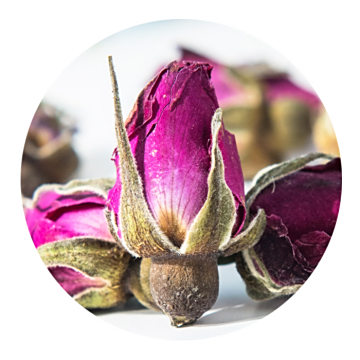
The original table describes full oval rounded substantial buds, broad textured petals, dark-purple to purple-red colour, pale-yellow liquor, rich lasting rose aroma and a sweet mellow refreshing taste. Lower comparisons allow broken material, lighter sweetness and less brightness. Half-open flowers were preferred in the earlier account; that is an inherited selection preference rather than a rule for all rose products.
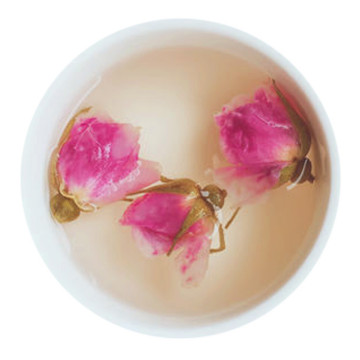
The original liquor photograph is withheld because identical pixels were assigned to another tea name. Its named identity could not be confirmed; the original file is preserved.
The cover is the original material illustration. These images are not TeaPlain tasting samples or proof of origin, grade, age, authenticity or image rights clearance.
Grade characteristics
This preserves the earlier Chinese edition’s sensory comparison. It is not a complete verified current standard table and does not grade your packet. Plant material, growing area, processing and grade are separate details. Decorative star rankings are omitted.
On a small screen, scroll the table sideways to compare the grades.
| Feature | Extra grade (old comparison) | Grade 1 (old comparison) | Grade 2 (old comparison) |
|---|---|---|---|
| Shape | Full oval rounded substantial buds, broad textured petals | Full oval rounded substantial buds, broad textured petals | Full oval rounded substantial buds with fragments |
| Dry colour | Dark purple | Dark purple | Purple-red |
| Liquor | Pale yellow | Pale yellow | Slight yellow |
| Aroma | Rich high lasting fragrance | Rich lasting fragrance | Clean rich fragrance |
| Taste | Sweet mellow refreshing | Sweet refreshing | Slightly sweet |
| Infused material | Lively pale-purple whole flowers | Lively pale-purple whole flowers | Lively fairly bright pale-purple material |
The original comparison is retained without stars. It is not a complete verified current standard or an authentication of species or grade.
Names and origin
The original names Guangdong rose black tea, Fujian rose green tea and Shandong/Pingyin rose flowers, as well as Zhejiang and Yunnan production. These examples do not make a scented tea and a plain dried-flower infusion the same product. Pingyin has a specific geographical-indication association; a generic rose packet is not automatically a protected-origin lot. Food-grade identity matters; ornamental roses, essential oils and petals from a florist are not interchangeable ingredients.
Everyday benefits
An unsweetened, clearly identified food-grade infusion can be enjoyed for flavour and as an alternative to a sweetened drink. The earlier therapeutic claims are not established for this cup. It is not a treatment or a substitute for food or prescribed care.
Who may enjoy this tea
For readers who enjoy rose fragrance and choose an identified food product, with or without a tea base.
When to take care
If taking medicines or Iron supplements, follow their instructions and ask a pharmacist about the actual product rather than assume that all herbal drinks have the same interactions. Pregnancy, breastfeeding, allergies and suitability for children need the identified ingredients and preparation; this page gives no medicinal dose.
How to brew
Original prose: glass or porcelain cup
The inherited method uses a heat-safe glass or porcelain cup, 1:50, 90–100°C / 194–212°F water, refilling at about one-third remaining and roughly three infusions. It gives no first steeping time. For an identified food-grade product only, an arithmetic example is 3 g with 150 mL Actual water; that is not a dose validated for every herb. Follow the complete packet instructions first. Different plant species, plant parts and processing cannot share one universal recipe.
These inherited directions are awaiting hands-on testing. Refilling changes the concentration and is not a new measured batch. Let the drink cool enough to sip; do not use a photograph to identify unknown plants.
Read the original illustration separately
Original illustration: rose corolla. Add warm water at about 80°C / 176°F, put in the flower material and wait 3–5 minutes. No gram dose or Actual water is supplied. The printed 70–80°C colour-loss explanation does not make fading, or failure to fade, a universal authenticity or safety test. It differs from the separate prose’s 90–100°C method.
For ordinary teaware options, see brew without a gaiwan. Keep each complete method together instead of selecting temperature, dose and time from different preparations.
Adjust your cup
Identify the ingredients and follow the actual food product’s complete preparation instructions first. Once that is clear, adjust within those directions for taste. Do not increase the dose or boiling time of unknown plant material to make it suitable for drinking.
How to buy
Check identified food-grade material, the plant part, full ingredients, maker, source, dates and actual preparation. A flower name or picture is not enough to identify a garden plant for drinking.
See buy your first Chinese tea for packet comparisons.
China price reference
Undated figures retained from the Chinese edition, in Chinese yuan (CNY). No original brand, batch, harvest or quotation date was recorded. These are not verified current retail quotes, a market average or manufacturer-suggested retail prices.
| Chinese-edition tier | CNY per 500 g (one jin) | Equivalent CNY per 100 g |
|---|---|---|
| Extra grade | 850 | 170 |
| Grade 1 | 600 | 120 |
Per 100 g is an arithmetic conversion, not a quoted packet. Do not infer a missing sensory or price tier. Compare actual growing area, style, harvest, roast, weight and channel. A currency conversion does not make a UK or US retail offer comparable to a China historical figure.
How to store
Original storage method
Keep the bag or food-safe container tightly sealed, in a cool dry place protected from light, moisture and strong smells. Reseal after taking a portion and check the closure, particularly during humid seasonal changes. Keep it away from cooking steam, the dishwasher, sunny windows and spices. Follow the product’s date and storage label; no universal shelf life is established here.
The original suggests refrigeration for a large or slowly used supply. Treat this as label-dependent rather than mandatory or a verified shelf-life extension. Seal against moisture and smells and let cold portions warm while still sealed before opening.
Origin, processing and history
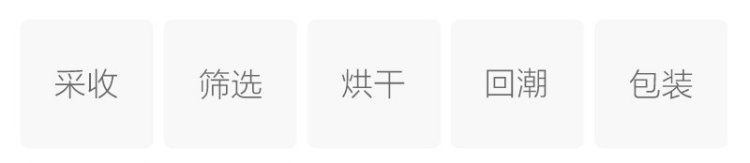
The old diagram labels harvesting, screening, drying, moisture re-equilibration and packing. It is a general flower-handling outline, not a test of species, hygienic processing or one producer.
Common questions
Does rose tea always mean a caffeine-free flower drink?
No. Some rose products contain black or green tea, while others are flowers only. Check the complete ingredients and caffeine label.
Can I move one number from this recipe into a different vessel?
Keep leaf form, measured dose and actual water, temperature, timing and separation together. Nominal capacity or a fill fraction is not a measured ratio.
Compare Pingyin Rose Tea, or browse the herbal infusion overview.
Editorial notes and updates
Updated 16 October 2026. Valid original descriptions, sensory comparisons, prose and image methods, storage handling, China price figures and usable pictures are retained with their scope. Doubtful medical, ranking and exact historical claims are revised or omitted. Current full grade clauses and historical prices are not certified. Original Chinese-labelled graphics have English reading notes; no TeaPlain tasting or brewing test is claimed. Internal research and image audits record the decisions.