At a glance
Cha Gao is a solid tea extract that dissolves in water. It needs its own product-specific dose and dissolution directions; an ordinary Pu-erh leaf-rinsing recipe does not apply.
| Detail | What to know |
|---|---|
| Chinese name | 普洱茶膏(固态速溶茶) |
| Tea family | Pu-erh tea |
| Associated origin | Yunnan association; actual extraction factory and source tea vary |
| Material form | Soluble solid tea extract, not a compressed leaf portion |
Taste and appearance
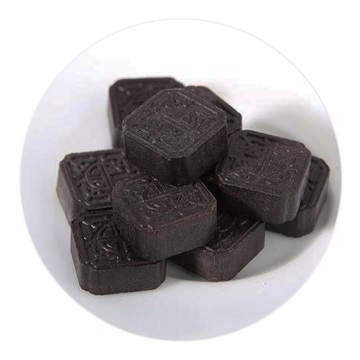
The inherited comparison describes small dark-brown glossy blocks, a clear reddish cup, clean lasting aged aroma and a smooth sweet-mellow taste. Soluble extract has no ordinary infused-leaf bottom: the old second cup photo labelled as leaves is a duplicate and is not displayed twice.
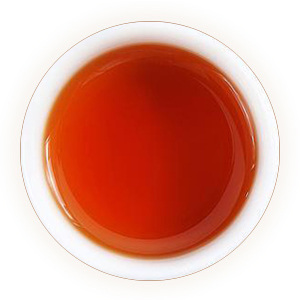
The old infused-leaf slot duplicates this article’s cup photograph. A soluble extract has no ordinary infused-leaf bottom; the cup is displayed once and both source files are preserved.
The cover is the original solid tea-extract illustration. These images are not TeaPlain tasting samples or proof of origin, grade, age, authenticity or image rights clearance.
Grade characteristics
This preserves the earlier Chinese edition’s sensory comparison. It is not a complete verified current standard table and does not grade your packet. Plant material, growing area, processing and grade are separate details. Decorative star rankings are omitted.
On a small screen, scroll the table sideways to compare the grades.
| Feature | Extra grade (old comparison) | Grade 1 (old comparison) | Grade 2 (old comparison) |
|---|---|---|---|
| Shape | Small regular square blocks, described as translucent | Small regular square blocks, described as translucent | Small regular square blocks, described as translucent |
| Dry colour | Glossy dark brown | Fairly glossy dark brown | Dark brown |
| Liquor | Clear, bright and reddish | Clear reddish | Fairly clear reddish |
| Aroma | Clean, rich and lasting aged impression | Clean and fairly lasting | Clean and fairly lasting |
| Taste | Smooth, soft, sweet and mellow | Smooth, sweet and mellow | Smooth, sweet and fairly mellow |
| After preparation | Dissolves; no ordinary leaf bottom | Dissolves; no ordinary leaf bottom | Dissolves; no ordinary leaf bottom |
The three columns are inherited comparisons, not verified current national extract grades. Translucency, cube shape and absence of leaves do not certify purity. Only two historical price points were supplied; per-weight comparisons with leaf tea do not establish equivalent servings.
Names and origin
Cha Gao literally means tea paste; tea resin is a common English product description. It is an extract separated from tea material and made into a soluble solid, rather than a tiny cake of leaves. Official instant-tea process descriptions and a current seller’s product directions support that distinction. The earlier claim of an inherently higher level of tea is a value judgement, not a verified quality rank. Source tea, extraction, formulation and food-product instructions must be checked separately; not every product is ancient-tree tea or the same ripe formulation.
Everyday benefits
Brewed without added sugar, this is an ordinary tea drink that can be an alternative to sweetened drinks and contribute to fluid intake. It contains caffeine. These everyday properties do not establish that this named tea treats disease, lowers blood sugar or improves sleep. No TeaPlain clinical or brewing test is claimed here.
Who may enjoy this tea
For people who want the convenience of an identified soluble tea product. Check its individual portion, ingredients and caffeine information rather than selecting it for medicinal or weight-loss claims.
When to take care
Tea resin is a concentrated tea product; do not copy a leaf-tea gram dose or infer low caffeine from a small cube. Follow the specific labelled serving and caffeine information, account for other caffeinated drinks, and keep portions out of children’s reach. If pregnant, sensitive to caffeine or taking medicines, discuss the exact product with a clinician or pharmacist. No universal caffeine amount or medical benefit is certified here.
Iron supplements: follow prescribed directions and ask the pharmacist about separation from tea-containing drinks.
How to brew
Dissolve the identified extract
Use the actual packet’s complete directions and weighed portion. As one seller-specific example, a Jinggu ripe resin is sold as approximately 0.5 g individually wrapped pieces and directs dissolving one in about 300–500 mL hot water. That does not define every brand’s dose, a fixed numeric water temperature or a ten-second steep. Allow the intended portion to dissolve; no leaf separation is needed for a fully soluble product.
| Detail | Scope of the example |
|---|---|
| Product | One identified Jinggu ripe tea-resin product, not an unknown cube |
| Portion | Approximately0.5g from that product’s directions |
| Actual water | About300–500mL measured water for that specified portion |
| Temperature and time | Hot water; no numeric temperature or dissolution time established by this example |
| Rinse | Do not substitute the old leaf-rinsing method |
These editorial readings are awaiting hands-on testing. A dry-gram portion of extract and a dry-gram portion of leaves are different products; follow the actual label and caffeine information. No universal maximum dose or caffeine concentration has been established here. Let the drink cool enough to sip.
Read the original illustration separately
Unsuitable original graphic withheld. It depicts one piece in150mL,100°C, a rinse discarded and repeated five-second leaf infusions. That is a leaf-tea/ball routine, not a reliable method for dissolving resin. The file is preserved internally, but its wash-and-discard steps are not offered as preparation advice. No replacement brewing image is invented.
For ordinary teaware options, see brew without a gaiwan. Keep each complete method together instead of selecting temperature, dose and time from different preparations.
Adjust your cup
Follow the actual extract’s labelled portion and measured water. A cube is not a weighed serving, and leaf-steeping times do not control a dissolved extract. Do not increase concentration to pursue claimed health effects.
How to buy
Require the maker, full ingredients, portion mass, dissolution instructions, dates and storage. Distinguish extract from pressed leaf, flavoured mixes and decorative blocks. A cube size is not a caffeine measurement or a quality grade.
See buy your first Chinese tea for packet comparisons.
China price reference
Undated figures retained from the Chinese edition, in Chinese yuan (CNY). No original brand, batch, harvest or quotation date was recorded. These are not verified current retail quotes, a market average or manufacturer-suggested retail prices.
| Chinese-edition tier | CNY per 500 g (one jin) | Equivalent CNY per 100 g |
|---|---|---|
| Extra grade | 1,200 | 240 |
| Grade 1 | 800 | 160 |
Per 100 g is an arithmetic conversion, not a quoted packet. Do not infer a missing sensory or price tier. Compare actual growing area, style, harvest, roast, weight and channel. A currency conversion does not make a UK or US retail offer comparable to a China historical figure.
How to store
Original storage method — scope correction
The old page copied a plain-Pu-erh carton/kraft-bag method with targets below 25°C and below 70%RH. That is not an independently verified storage protocol for a moisture-sensitive soluble extract, and bamboo cake wrappers or an unsealed outer carton cannot replace its own packaging.
Keep the actual extract in its specified original packaging, dry, protected from moisture, sunlight and food smells; follow its label for opened portions and shelf life. Do not deliberately age it as a loose cake or assume an unlimited keeping period. In a kitchen, keep it away from stove and dishwasher steam and handle with dry hands. See storing opened tea.
Origin, processing and history
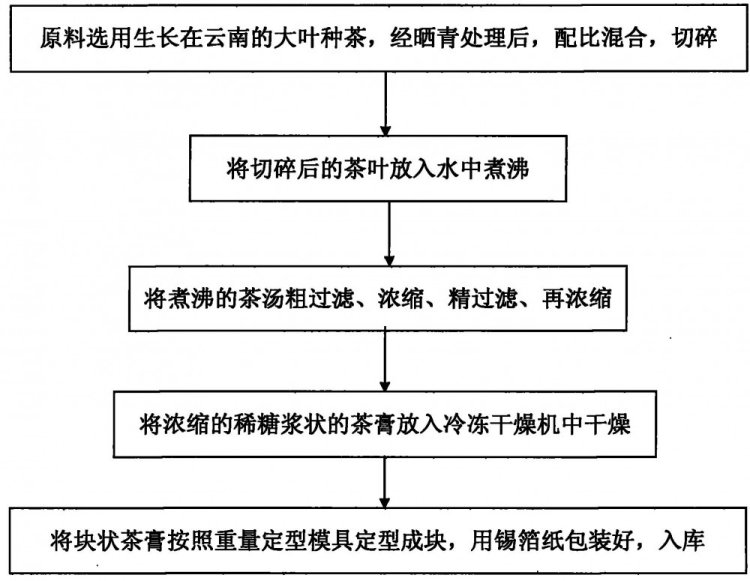
The inherited map selects and blends tea, cuts it, boils in water, filters and concentrates, filters and concentrates again, freeze-dries the concentrate, then shapes and foil-wraps blocks. It illustrates one extraction/drying approach, not every historical or modern resin. Official instant-tea descriptions likewise distinguish extraction, filtration and concentration from making a pressed cake. No claim of universally zero residues, superior safety or a clinical effect is retained.
Common questions
Should I rinse tea resin and discard the first water?
Do not follow a leaf-rinsing routine for a soluble extract. Read the actual packet’s dissolution directions: the solid itself dissolves into the drink. Its grams cannot be substituted for the same grams of ordinary leaves.
Can I move one number from this recipe into a different vessel?
Keep leaf form, measured dose and actual water, temperature, timing and separation together. Nominal capacity or a fill fraction is not a measured ratio.
Compare Shou Puerh, or browse the pu-erh tea overview.
Editorial notes and updates
Updated 16 October 2026. Valid original descriptions, sensory comparisons, prose and image methods, storage handling, China price figures and usable pictures are retained with their scope. Doubtful medical, ranking and exact historical claims are revised or omitted. Current full grade clauses and historical prices are not certified. Original Chinese-labelled graphics have English reading notes; no TeaPlain tasting or brewing test is claimed. Internal research and image audits record the decisions.