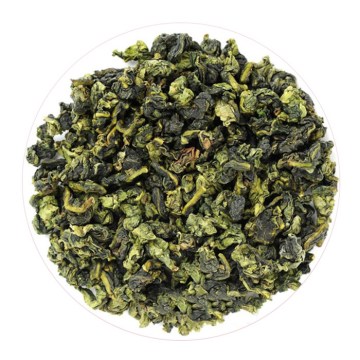
At a glance
Tieguanyin is an oolong tea closely associated with Anxi County in Fujian, China. You may see the name written as Tie Guan Yin, Ti Kuan Yin or Iron Goddess of Mercy. It names both a tea cultivar and the tea made from it.
| Detail | What to know |
|---|---|
| Chinese name | 铁观音 — Tiěguānyīn |
| Tea family | Oolong |
| Main origin associated with the name | Anxi, Quanzhou, Fujian |
| Typical leaf form | Tightly rolled leaves that open during brewing |
| First thing to check | The style: fresh and floral, roasted, or aged |
Taste and appearance
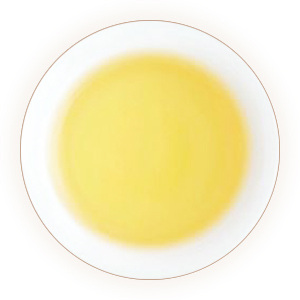
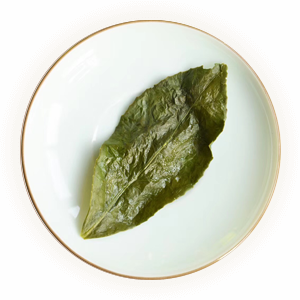
The dry-leaf photograph is shown at the top of this guide. Illustrations are retained from the Chinese edition. They are not TeaPlain tasting samples or proof of origin or grade.
Tieguanyin does not have just one colour or flavour. Check the style on your packet before judging it against a photograph or someone else’s tasting notes.
| Style wording | What it describes |
|---|---|
| 清香型 — qingxiang, fresh-aroma style | A fresher, floral direction, often described with orchid-like aromas and greener leaves |
| 浓香型 — nongxiang, rich-aroma style | A roasted direction, with a fuller profile that may include toasted and sweet notes |
| 陈香型 — chenxiang, aged-aroma style | A deliberately processed and stored style with aged aromas and darker colours |
These are descriptions of style, not a best-to-worst ranking. Individual products differ. An aged style is not simply any old packet left in a cupboard, and an orchid-like aroma does not mean orchid flowers were added. Check the ingredient list for blends or flavourings.
Grade characteristics
This retains the Chinese edition’s three-column sensory comparison, broadly describing a greener, floral style. It is not a complete current standard table and does not grade roasted or aged Tieguanyin by the same colour rules. Ask which product style and standard a seller’s grade refers to.
| Feature | Extra grade — 特级 | Grade 1 — 一级 | Grade 2 — 二级 |
|---|---|---|---|
| Dry-leaf shape | Plump, tightly rounded and even | Sturdy, tightly rolled and clean | Curled and firm, with some tender stems |
| Dry-leaf colour | Lustrous sandy green | Glossy green with sandy-green tones | Green with some sandy-green tones |
| Liquor | Bright golden-yellow | Clear golden-yellow | Golden-yellow |
| Aroma | Persistent floral, orchid-like character | Clear, lasting aroma | Fresh, lighter aroma |
| Taste | Full, fresh and sweet, with a lingering finish | Clean, fresh and sweet | Fresh and mellow |
| Infused leaves | Thick, soft and bright, with lasting aroma | Soft, bright and evenly opened | Soft, bright and fairly even |
Names and origin
Anxi is a county in Quanzhou, Fujian; Xiping is one of the places within Anxi associated with Tieguanyin’s history. “Anxi Tieguanyin” is more specific wording than a packet that only says “oolong.”
Keep three questions separate: what cultivar was used, where the tea was grown, and how it was processed. The name alone does not tell you its roast, harvest year or storage history. A rolled leaf shape cannot establish those details either.
Everyday benefits
This tea contains caffeine, which can support alertness. Taken without added sugar, it offers a flavourful alternative to sweetened drinks. Tea also contributes to daily fluid intake. These are everyday drink choices, not evidence that this named tea treats high cholesterol, improves immunity or produces weight loss.
Who may enjoy this tea
You may enjoy it if you like floral aromas, want to explore roasted oolong styles, or enjoy comparing several small infusions. Choose the style by flavour preference rather than a traditional “body constitution” label.
When to take care
- Caffeine sensitivity or sleep problems: consider your total caffeine intake and avoid it near bedtime if it disturbs your sleep.
- Pregnancy, breastfeeding or medicines: ask a clinician or pharmacist about your caffeine intake and any relevant medicine instructions.
- Iron supplements: follow the medicine’s instructions about separating tea from the dose; do not treat tea as a remedy for anaemia.
These considerations depend on the person and preparation, rather than a blanket prohibition based on tea colour or traditional “hot” and “cold” categories.
How to brew
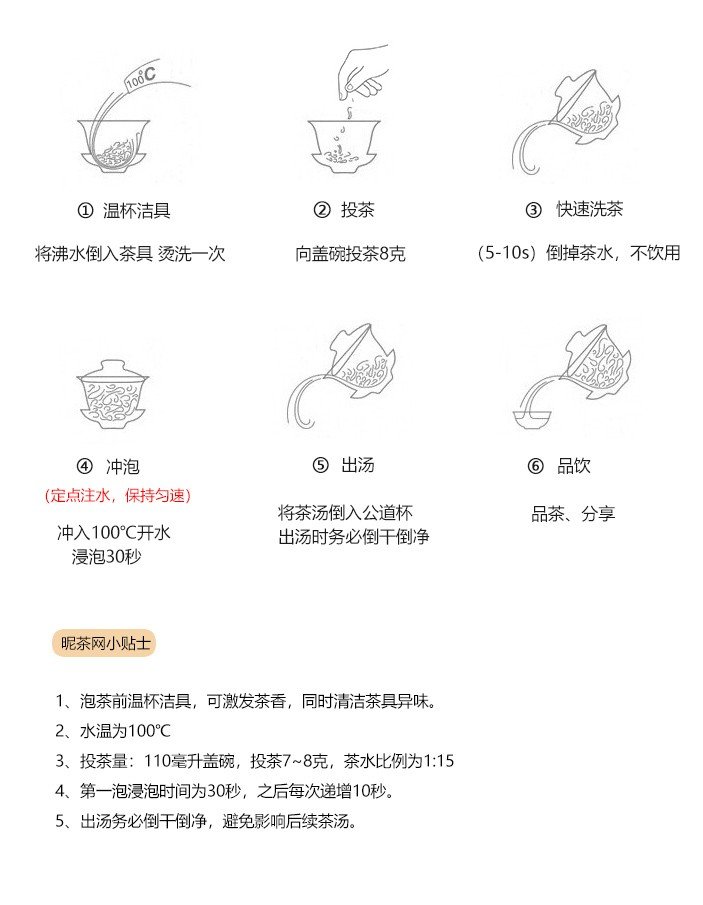
Original Chinese gaiwan method
The gaiwan instructions below follow the original Chinese brewing diagram. They describe the pictured method, not a universal recipe for every packet. The 110 mL label is the gaiwan’s nominal capacity; the diagram does not specify the actual water added. Follow your packet’s directions when they give a different complete method.
Warm the gaiwan with boiling water, add 8 g of tea, rinse for 5–10 seconds and discard that rinse. Brew with 100°C / 212°F water for 30 seconds, then pour off completely. The diagram suggests adding 10 seconds to each later infusion.
The dosing panel says 8 g, while the notes allow 7–8 g and describe an approximate 1:15 ratio. Use the pictured vessel and dose as a starting method; nominal capacity does not establish an exact tea-to-water ratio.
Mug method and vessel-specific starting points
Editorial starting points, awaiting hands-on testing. These methods are for loose Tieguanyin without added ingredients. Use your packet’s directions first if they specify the method. Both methods below separate the leaves from the drink.
On a small screen, scroll the table sideways to see all brewing details.
| Method | Tea | Actual water / pictured vessel | Temperature | First infusion |
|---|---|---|---|---|
| Mug with a roomy removable basket, or glazed teapot | 3 g | 250 mL / about 8.5 US fl oz | 95°C / 203°F | 2 minutes, then remove the basket or decant completely |
| Gaiwan shown in the diagram | 8 g (diagram notes: 7–8 g) | 110 mL nominal capacity; actual fill not specified | 100°C / 212°F | 30 seconds, then decant completely |
Use a vessel with enough spare room for the water and expanding leaves. For the mug method, a heat-safe vessel of at least 300 mL is a useful starting size. For the mug row, measure the water you actually add. The gaiwan row instead reports the vessel capacity shown in the original diagram.
Start timing when water touches the leaves. With a gaiwan, begin pouring early enough to account for a slow pour. If you choose a quick preliminary rinse, keep it separate from the drinking infusion; it is not a sterilisation step. Let the tea cool enough to sip before tasting.
Try another infusion with the same leaves, adjusting the time to taste. The phrase “fragrant after seven infusions” is not a promise that every packet or brewing method will produce seven equally good cups. If you only have an ordinary mug, see brewing without a gaiwan.
Adjust your cup
| What you notice | One change to try next time |
|---|---|
| Too strong, bitter or drying | Keep the water amount fixed and shorten the infusion; if still too strong, try less leaf |
| Weak or watery | Give the next infusion a little longer before increasing the leaf amount |
| Wet leaves tightly packed in the basket | Use a roomier basket so the leaves can open |
| The flavour is different from the description | Check the style and preparation directions before deciding the tea is faulty |
Change one variable at a time. For more help, read fix a disappointing first cup.
How to buy
Ask for the origin, style, harvest or production date, pack size and storage directions. A small sample is useful before committing to a larger quantity of an unfamiliar style.
If a grade is advertised, ask which standard or seller system it refers to. “Premium,” stars and grades from different suppliers are not a shared quality scale. Compare the price per gram alongside style and product details, rather than relying on a single price for “Tieguanyin.” See buy your first Chinese tea.
China price reference
Undated figures retained from the Chinese edition, in Chinese yuan (CNY). The original entry did not record a brand, product batch or quote date. These are not verified current retail quotes or manufacturer-suggested retail prices.
| Chinese-edition tier | CNY per 500 g (one jin) | Equivalent CNY per 100 g |
|---|---|---|
| Extra grade — 特级 | 700 | 140 |
| Grade 1 — 一级 | 450 | 90 |
The 100 g column is a unit conversion, not a quotation for a 100 g pack. For a current purchase, ask for the actual branded product, weight, date and quoted price. UK or US shelf prices may also include shipping, import costs and local retail costs; direct currency conversion is not a like-for-like offer.
How to store
Original storage method
Keep unopened individual sachets inside a dry, closed tin. For loose tea, use a moisture-resistant foil pouch, gently remove excess air and seal it before putting it in an airtight tin or suitable lidded jar. Vacuum packing was an option in the Chinese method, not a requirement for every tea or home user.
Keep the container out of sunlight, damp areas and strong smells. The Chinese edition’s storage targets were below 25°C / 77°F and below 50% relative humidity. Its general shelf-life reference was 24–36 months; this is retained as legacy guidance, not a newly verified shelf life for every style or an opened packet. Follow the actual product label.
In a UK or US kitchen
Use a cupboard away from the hob or stove, oven, dishwasher steam and spice containers. A decorative tin still needs a properly sealed inner pouch. For a fresh-aroma style with cold-storage instructions, use moisture-proof packaging and let the packet warm while sealed before opening. Roasted styles may have different directions.
For opening, daily portions and handling a cold packet, see store an opened packet.
Origin, processing and history
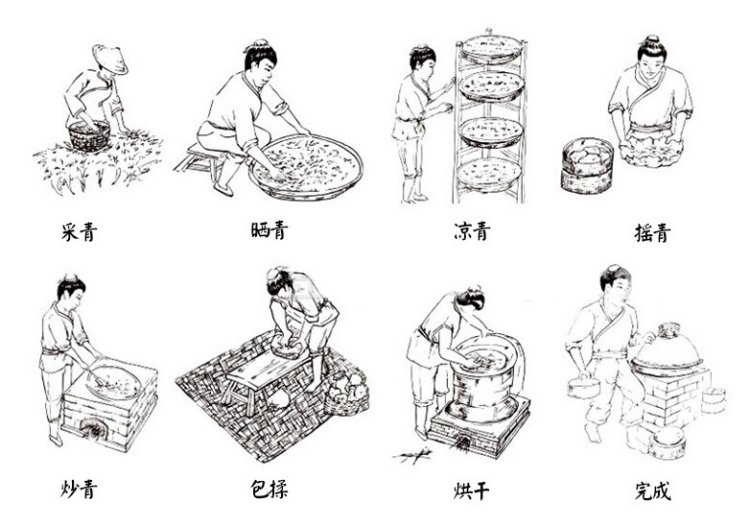
Tieguanyin belongs to Anxi’s long-established tea-growing and tea-making culture. Its manufacture includes withering, controlled handling and shaking of the leaves, heat treatment, rolling and drying; refinement and roasting help create different styles.
The name is associated with Guanyin and is often translated as Iron Goddess of Mercy. Stories about dreams and imperial naming belong to its cultural background, rather than proving the age or quality of a packet. The Anxi Tieguanyin Tea Culture System was recognised as a Globally Important Agricultural Heritage System in 2022.
Common questions
Is Tieguanyin a green tea?
It is an oolong. A greener appearance or fresh floral style does not change its tea family.
Do I need a clay teapot?
You can begin with a roomy removable infuser or glazed teapot. A gaiwan is an option for smaller, repeated infusions; the methods use different amounts and timings.
Should every Tieguanyin go in the fridge?
Check the style, packaging and supplier’s directions. Cold storage is relevant to some fresher styles, not an instruction to refrigerate every packet.
Editorial notes and updates
Updated 16 October 2026. This guide describes the tea and its main styles; it does not assess a particular packet. Brewing tables are editorial starting points awaiting hands-on testing. Product-specific directions take precedence.